What About Creation and Evolution?

John Haldone, a scientist, once suggested to Monsignor Knox that in a universe containing millions of planets it was inevitable that life would appear by chance on one of them. “Sir,” said Knox, “if Scotland Yard found a body in your Saratoga trunk, would you tell them, ‘There are millions of trunks in the world—surely one of them must contain a body’? I think they still would want to know who put it there
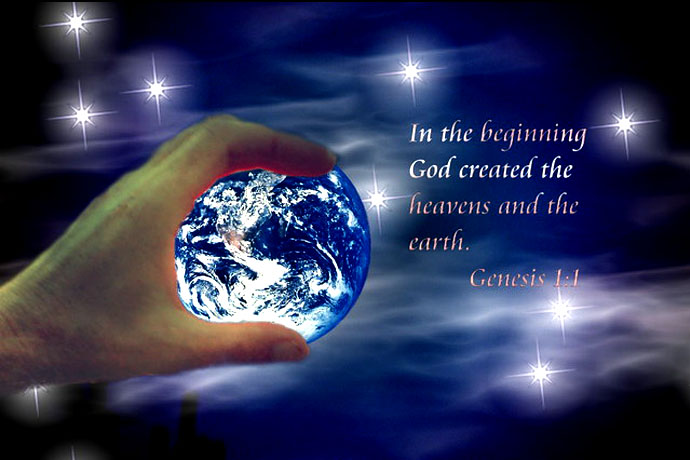
A sound explanation may exist for the explosive birth of our Universe, but if it does, science cannot find out what that explanation is. The scientist’s pursuit of the past ends in the moment of creation. This is an exceedingly strange development, unexpected by all but the theologians. They have always accepted the word of the Bible, “In the beginning, God created the heaven and earth.” To which St. Augustine added, “Who can understand this mystery or explain it to others?” The development is unexpected because science has had such extraordinary success in tracing the chain of cause and effect backward in time. . . . Now we would like to pursue that inquiry farther back in time, but the barrier to further progress seems insurmountable. It is not a matter of another year, another decade of work, another measurement, or another theory; at this moment it seems as though science will never be able to raise the curtain on the mystery of creation. For the scientist who has lived by his faith in the power of reason, the story ends like a bad dream. He has scaled the mountains of ignorance; he is about to conquer the highest peak; as he pulls himself over the final rock, he is greeted by a band of theologians who have been sitting there for centuries. Robert Jastrow, a scientist who calls himself “agnostic” in religious matters, has written in God and the Astronomers :
Whether you say that God made the dog or the dog made God does not seem to matter; that is only one of the sterile disputations of the too subtle theologians. But so long as you begin with a long word like evolution, the rest will roll harmlessly past; very probably the editor had not read the whole of the title, for it is rather a long title and he was rather a busy man.
But this little incident has always lingered in my mind as a sort of parable. Most modern histories of mankind begin with the word evolution, and with a rather wordy exposition of evolution, for much the same reason that operated in this case. There is something slow and soothing and gradual about the word and even about the idea. As a matter of fact, it is not, touching these primary things, a very practical word or a very profitable idea. Nobody can imagine how nothing could turn into something. Nobody can get an inch nearer to it by explaining how something could turn into something else. It is really far more logical to start by saying, “In the beginning God created heaven and earth” even if you only mean, “In the beginning some unthinkable power began some unthinkable process.” For God is by its nature a name of mystery, and nobody ever supposed that man could imagine how a world was created any more than he could create one. But evolution really is mistaken for explanation. It has the fatal quality of leaving on many minds the impression that they do understand it and everything else, just as many of them live under a sort of illusion that they have read The Origin of Species.
But this notion of something smooth and slow, like the ascent of a slope, is a great part of the illusion. It is an illogicality as well as an illusion; for slowness has really nothing to do with the question. An event is not any more intrinsically intelligible or unintelligible because of the pace at which it moves. For a man who does not believe in a miracle, a slow miracle would be just as incredible as a swift one.
In other words, every sane sort of history must begin with man as man, a thing standing absolute and alone. How he came there, or indeed how anything else came there, is a thing for theologians and philosophers and scientists and not for historians.
Science is weak about these prehistoric things in a way that has hardly been noticed. The science whose modern marvels we all admire succeeds by incessantly adding to its data. In all practical inventions, in most natural discoveries, it can always increase evidence by experiment. But it cannot experiment in making men, or even in watching to see what the first men make
He cannot keep a tribe of primitive men like a pack of hounds and notice how far they are influenced by the herd instinct. If he sees a particular bird behave in a particular way, he can get other birds and see if they behave in that way; but if he finds a skull, or the scrap of a skull, in the hollow of a hill, he cannot multiply it into a vision of the valley of dry bones. In dealing with a past that has almost entirely perished, he can only go by evidence and not by experiment. And there is hardly enough evidence to be even evidential. Thus while most science moves in a sort of curve, being constantly corrected by new evidence, this science flies off into space in a straight line uncorrected by anything. But the habit of forming conclusions, as they can really be formed in more fruitful fields, is so fixed in the scientific mind that it cannot resist talking like this. It talks about the idea suggested by one scrap of bone as if it were something like the airplane which is constructed at last out of whole scrapheaps of scraps of metal. The trouble with the professor of the prehistoric is that he cannot scrap his scrap. The marvelous and triumphant airplane is made out of a hundred mistakes. The student of origins can only make one mistake and stick to it.
We talk very truly of the patience of science, but in this department it would be truer to talk of the impatience of science. Owing to the difficulty above described, the theorist is in far too much of a hurry. We have a series of hypotheses so hasty that they may well be called fancies and cannot in any case be further corrected by facts. The most empirical anthropologist is here as limited as antique person. Chesterton
In his autobiographical adventure Surely You’re Joking, Richard Feynman, perhaps the greatest physicist of his generation, said that one’s first task in explaining science is not to fool people, to which he immediately added that the easiest person to fool is yourself. When it comes to science or faith, our aim must be to tell the truth. It is not to fool people, and that means not fooling ourselves. It means being honest about what we truly believe, about the strength of the evidence for our beliefs, and where our beliefs may be firm and yet unjustified or even unjustifiable.
The physicist Bob Bass was a friend of mine. A believing Roman Catholic, he died a few years back when in his eighties. He had been a Rhodes Scholar in the 1950s and had thereby gotten to meet Albert Einstein. As Bob shared with me, Frank Aydelotte, former president of Swarthmore College and head of the Institute for Advanced Study, was able to gather the 32 Rhodes Scholars at the time (one of them Bob) and have them meet with Einstein as the guest of honor. During their time together, Aydelotte posed this question: “Now, Einstein, can you give these young men any parting advice?” (Note that the Rhodes Scholarship did not start admitting women until 1977.) Einstein replied, “If I could give the young men any advice, it would be this: Don’t believe anything is necessarily true just because you see it in the newspapers, or hear it on the radio, or everybody else believes it. Always think for yourself!”
But in fact, methodological naturalism is just an arbitrary rule for doing science. And who gets to set the rules? Our word science derives from the Latin word scientia, which was the generic Latin word for knowledge—all knowledge. In the nineteenth century, the term came to mean specialized knowledge of nature, but the fact is that what we call science today has a long history, and throughout much of that history, it was called natural philosophy. What’s more, the rules of science or natural philosophy have changed over time. Scientists most responsible for the rise of modern science—such as Copernicus, Kepler, and Newton—rejected methodological naturalism outright, finding in nature clear, scientifically discernible marks of the divine intelligence. William A. Dembski, “What Are Science and Faith
Theistic evolution (also known as theistic evolutionism or God-guided evolution, or alternatively called evolutionary creationism) is a view that God acts and creates through laws of nature. Here, God is taken as the primary cause while natural causes are secondary, positing that the concept of God and religious beliefs are compatible with the findings of modern science, including evolution. Theistic evolution is not in itself a scientific theory, but includes a range of views about how science relates to religious beliefs and the extent to which God intervenes. It rejects the strict creationist doctrines of special creation but can include beliefs such as creation of the human soul. Modern theistic evolution accepts the general scientific consensus on the age of the Earth, the age of the universe, the Big Bang, the origin of the Solar S
Many theologians resist intelligent design’s fundamental claim that the natural world exhibits objectively discernible design. God would ultimately be behind all the design in the world. Thus, for instance, any design evident in complex biological systems would have to be ascribed to God.
Whatever one makes of intelligent design, one of the dominant debates of the day, as a scientific theory, there is a version of it which is almost inescapable. There have been groups of people (mostly Christians but some non-Christians ) who point to what they call irreducible complexity.
That is, structures in the human being that are so complex it is statistically impossible to imagine how they could have come to be by chance or chance mutation or mere selection of the fittest or any of the standard appeals that are made in traditional Darwinism.
This irreducible complexity demands you postulate a designer. There are some non-believers who argue that point, as well as Christians who argue that point.
Then some argue back (many unbelievers and believers), “Yes, but that might simply mean we don’t know enough about the mechanisms. If you start filling God in wherever we don’t have an explanation, then you’re putting God into the gaps of our ignorance, but as we learn more the gaps get filled up and God gets smaller. We don’t need a God of the gaps!”
Many writers who are not Christians in any sense by their own declaration sometimes speak of their marvel, almost to the level of one could call worship, at the unimaginable complexity and splendor and glory of the universe.
If you begin with this God, the testimony to his greatness in what we see all around us is mind-boggling, and it takes an enormous act of will on the part of the most cynical scientists instead to look at it all and say, It’s just physics. Stop admiring it, there’s no design. It’s just molecules bumping into molecules.
In Climbing Mount Improbable Dawkins calls organisms “designoids” meaning things that look exactly as if they were designed but must actually have been crafted by the “blind watchmaker” the mindless Darwinian forces of mutation and selection.
The frame of reference, or point of view, for the creation account suddenly shifts in Genesis 1:2, from the heavenlies that make up the entire physical universe to the surface of planet Earth. For whatever reasons, perhaps because it comes so abruptly, most readers—even scholarly commentators—miss the shift. I am convinced that my absorption in science prepared me to see it. In fact, I was struck with amazement that this ancient document actually is structured like a modern research report.
Hugh Ross, The Genesis Question: Scientific Advances and the Accuracy of Genesis