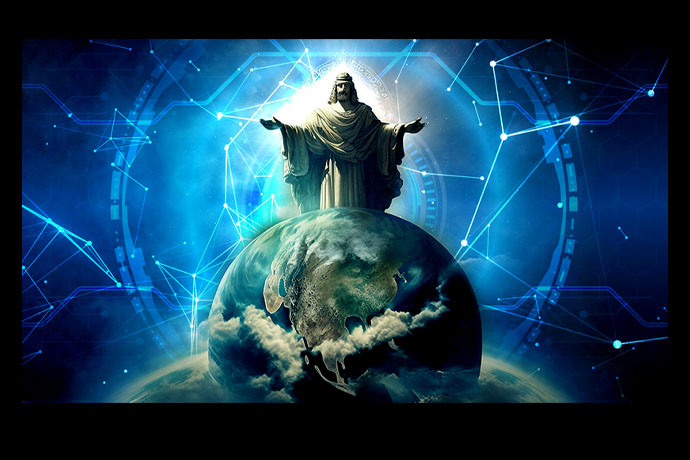
The Importance of the History of Genesis

CLEVERNESS KILLS WISDOM: that is one of the few sad and certain things.
IN THE BEGINNING of the twentieth century you could not see the ground for clever men. They were so common that a stupid man was quite exceptional, and when they found him, they followed him in crowds down the street and treasured him up and gave him some high post in the State. And all these clever men were at work giving accounts of what would happen in the next age, all quite clear, all quite keen-sighted and ruthless, and all quite different. Chesterton
Why is the Genesis issue of creation important?
Many people today say, can’t we just ignore the subject of origins and get on with experiencing our lives now? Many people who believe in the Bible still say, ‘Why be so concerned, when the subject of origins comes up.
If you meet a stranger, your first query, if not immediately expressed, is ‘Where do you come from?’ To understand who that person is and how they relate to you, it is important to know about their origin.
Suppose now we develop this idea and someone comes saying they represent a landowner from afar who lays claim to all our house and possessions, our indignant response might well be ‘Who do you think you are?’ followed by a demand for proof of identity. The legal wrangling which follows would be very much to do with original documents and proof of ownership. Eventually a vital document is found showing beyond doubt that the absent landowner not only owns the land, house and possessions, but built the house to begin with. The plans and title deeds are all in his name.
It is foolish not to recognize the relevance of the question of the historicity of Genesis to other very important areas of belief and practice. Thomas Huxley the ardent evolutionist a convinced atheist, was clear-cut in his thinking, he knew that the influence of Christianity would wane if one could cast doubt on the truthfulness of the first book of the Bible.
He knew the Bible better than many Christians who falsely tried to marry the tenets of evolution and Christianity. Huxley knew that in time, all the major doctrines held by the established church would be abandoned once they had compromised on Genesis.
Once Creation, the Fall and the Flood are brought into question as history, then this brings immediately into disrepute, the Lord Jesus Christ himself who appealed to Genesis as history.
The whole meaning of sin and redemption is blurred and lost if we lose the anchor of Genesis.
Christ regarded the major characters and events in Genesis as historical.
The same word from God which brought the Flood on the world, is the same word which reserves the world to final judgement.
Darwin (who was frank enough to admit that chance building the eye is absurd), goes on to say that the eye appeared by gradual stages nevertheless! Darwin was more honest about the difficulties than Dawkins, but in the end both deny obvious common sense, that intricate mechanisms never happen without external thought and purpose.
Why is there something rather than nothing?
This is not profound for the reason that it is not even a true question. The question seems to offer us a choice between something and nothing. But what is nothing? As soon as we answer that, saying, “Nothing is …,” nothing ceases to be nothing and becomes something. If nothing really is nothing, nothing defies description. In fact, it defies mental conception of any kind. So the question really boils down to: Why is there something?
In this form the question is not meaningless. On the contrary, it is one of the truly big philosophical questions. It can be stated in different forms—Where did the universe come from? Who made the atom? How did everything get to be as it is?—but in essence these are the same basic questions. Something is there—an immense, intricate, and orderly something. It was there before we were, for we cannot even imagine our existence without it. But how did it get there? And how did it get to be as we detect it?
Genesis 1:1 is the answer to these questions. It tells us that “in the beginning God created the heavens and the earth.”
Like all truly big questions, the possibilities are not endless. In this case, there are just four.
First, there is the view that the universe had no origin. That is, there was no origin because in some form the universe always existed. Matter existed. This has been the dominant view of both ancient and modern science until relatively recent times, and it is still held by some.
Second, there is the view that everything has a beginning and that this beginning was the work of a good personal being. This is the Christian view.
Third, everything came into existence through the work of a personal being who is evil.
Fourth, there is now and there always has been a dualism. This was the outlook of the ancient cosmologies, of which the Babylonian Epic is an example. It is still the characteristic view of the eastern religions and mysticism.
What are we to say concerning these four possibilities? The easiest to dismiss is number three, which gives a personal but evil origin to the universe. It says, in effect, that Satan is the creator. This is easiest to dismiss because it does not give an adequate explanation of the origin of the good. Evil can be conceived as a corruption of the good, Satan can rebel against the Christian
God, but it is not really possible to think of good as having emerged out of evil.
In the former case, evil can be a misuse of otherwise good traits or abilities. But in the second case, there is no place for the good to come from. We may state the problem in a slightly difficulties than Dawkins, but in the end both deny obvious common sense, that intricate mechanisms never happen without external thought and purpose.
Why is there something rather than nothing?
This is not profound for the reason that it is not even a true question. The question seems to offer us a choice between something and nothing. But what is nothing? As soon as we answer that, saying, “Nothing is …,” nothing ceases to be nothing and becomes something. If nothing really is nothing, nothing defies description. In fact, it defies mental conception of any kind. So the question really boils down to: Why is there something?
In this form the question is not meaningless. On the contrary, it is one of the truly big philosophical questions. It can be stated in different forms—Where did the universe come from? Who made the atom? How did everything get to be as it is?—but in essence these are the same basic questions. Something is there—an immense, intricate, and orderly something. It was there before we were, for we cannot even imagine our existence without it. But how did it get there? And how did it get to be as we detect it?
Genesis 1:1 is the answer to these questions. It tells us that “in the beginning God created the heavens and the earth.”
Like all truly big questions, the possibilities are not endless. In this case, there are just four.
First, there is the view that the universe had no origin. That is, there was no origin because in some form the universe always existed. Matter existed. This has been the dominant view of both ancient and modern science until relatively recent times, and it is still held by some.
Second, there is the view that everything has a beginning and that this beginning was the work of a good personal being. This is the Christian view.
Third, everything came into existence through the work of a personal being who is evil.
Fourth, there is now and there always has been a dualism. This was the outlook of the ancient cosmologies, of which the Babylonian Epic is an example. It is still the characteristic view of the eastern religions and mysticism.
What are we to say concerning these four possibilities? The easiest to dismiss is number three, which gives a personal but evil origin to the universe. It says, in effect, that Satan is the creator. This is easiest to dismiss because it does not give an adequate explanation of the origin of the good. Evil can be conceived as a corruption of the good, Satan can rebel against the Christian
God, but it is not really possible to think of good as having emerged out of evil.
In the former case, evil can be a misuse of otherwise good traits or abilities. But in the second case, there is no place for the good to come from. We may state the problem in a slightly