The Book of Revelation

Revelation’s visions are designed to disturb readers in order to bring them to renewed lives of faith and faithfulness.
Revelation is part of a long story in the Bible in which people are repeatedly drawn away from Israel’s God, so that they worship the gods of the nations . The vision of the New Jerusalem is the rightful culmination of this story, for in it the situation is reversed, and the nations come to worship God. Such a future, in which the peoples of the world come to worship the Lord and to walk in his light, is the future for which the prophets hoped (Isa. 60:1–3, 5, 11).
In the New Jerusalem, the barriers of sin and mortality are removed, and the redeemed find themselves again in the garden. Instead of hiding from God’s face, they turn towards God’s face, for just as the privilege of being God’s people is extended to the nations, the privilege of serving as high priest is extended to all worshipers, who bear God’s name on their foreheads .
The river and tree of life: 22:1–5
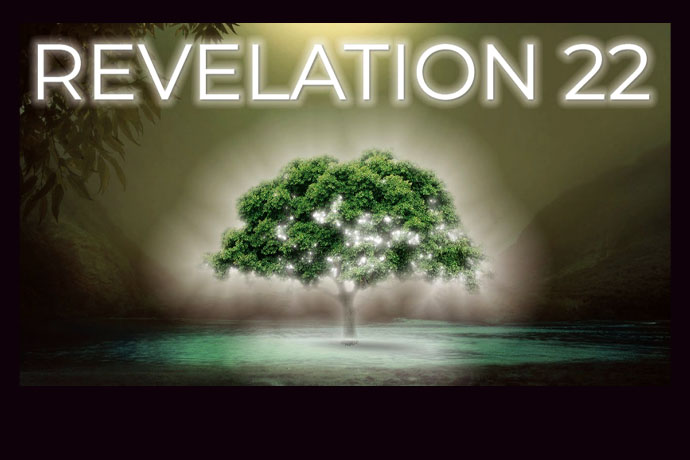
22 And he showed me a river of water of life, bright as crystal, proceeding out of the throne of God and of the Lamb, 2 in the midst of the street thereof. And on this side of the river and on that was the tree of life, bearing twelve manner of fruits, yielding its fruit every month: and the leaves of the tree were for the healing of the nations. 3 And there shall be no curse any more: and the throne of God and of the Lamb shall be therein: and his servants shall serve him; 4 and they shall see his face; and his name shall be on their foreheads. 5 And there shall be night no more; and they need no light of lamp, neither light of sun; for the Lord God shall give them light: and they shall reign for ever and ever.
The vision of the New Jerusalem ends the spiral of warning and promise by underscoring that God’s will is finally for the redemption of the nations.
This climactic vision brings together God’s particular promises to his chosen people and his intentions for the world as a whole. The city in the vision encompasses a garden like the one God prepared for all humankind, for within the city flows the river of the water of life, together with the tree of life that grew in Eden (Gen. 2:9–10).
Genesis tells how the ancestors of all humankind disobeyed God, so that the earth was cursed because of their sin, and they were driven away from the tree of life to toil and die (Gen. 3:1–24).
23 So the LORD God sent him away from the garden of Eden to work the ground from which he was taken. 24 He drove the man out and stationed the cherubim and the flaming, whirling sword east of the garden of Eden to guard the way to the tree of life.l
Revelation, however, holds out the hope that in the city of God nothing will be “accursed” any longer and that people will taste of the tree of life. They will no longer need to eke a living from the earth, for the tree of life will give them fruit continually (Rev. 22:2–3).
John adds that the leaves will be “for the healing of the nations” (Rev. 22:2).
In the end, those who gather around the throne see the face of God and reign with him forever, in the glory of God’s everlasting light (22:4–5). This marks the final reversal of the story that began when Adam and Eve sinned and hid themselves from the face of God in shame, seeking refuge in the shadows (Gen. 3:8). God’s light, purity, and power threaten the darkness of human sin, uncleanness, and mortal weakness.
The message is true: 22:6
6 And he said unto me, These words are faithful and true: and the Lord, the God of the spirits of the prophets, sent his angel to show unto his servants the things which must shortly come to pass
Jesus is coming Blessing for obedience: 22:7
7And behold, I come quickly. Blessed is he that keepeth the words of the prophecy of this book.
Revelation’s emphasis on God and Christ as the End of all things (Rev. 1:8, 17; 21:6; 22:13) helps readers understand what it means when it says, “Blessed is the one who keeps the words of the prophecy of this book” (22:7; compare 22:10, 18, 19). In comments at the beginning of this chapter, we noted that throughout Revelation, prophecy is known by what it does: true prophecy moves people to serve God and false prophecy draws people away from God.
John’s witness: 22:8–9
8And I John am he that heard and saw these things. And when I heard and saw, I fell down to worship before the feet of the angel that showed me these things. 9And he saith unto me, See thou do it not: I am a fellow-servant with thee and with thy brethren the prophets, and with them that keep the words of this book: worship God.
Do not seal the book: 22:10
10And he saith unto me, Seal not up the words of the prophecy of this book; for the time is at hand.
Revelation was an open book from the time it was written onward. To call Revelation “prophecy” means that it is a form of communication that called its first readers to repentance, perseverance, and hope in God and the Lamb. It is not a coded prediction whose true message is concealed from readers until the final years of world history. Asking what Revelation communicated to the Christians in the seven churches helps to discipline our thinking, as we
Let people do what they do—evil, righteousness, or holiness: 22:11
11 He that is unrighteous, let him do unrighteousness still: and he that is filthy, let him be made filthy still: and he that is righteous, let him do righteousness still: and he that is holy, let him be made holy still
The parable of Lazarus.
In the context of this whole parable, the reason becomes clear in the dialogue that follows. He is his own God. He is utterly self-absorbed. He does not love God with heart and soul and mind and strength. Even in hell, there’s no mark of contrition or repentance or anything else. There is still utter self-absorption. The man does not recognize God.
As far as I can see in Scripture, there is no hint anywhere that people in hell genuinely repent. In the parable of the rich man and Lazarus, the rich man lifts his eyes in torment and somehow he is enabled to see, in the story, Abraham and Lazarus afar off. Considering how he had treated Lazarus during the days of his flesh, what do you think the rich man in hell should say? What do you think he would say?
Wouldn’t we expect him so say, “Oh Lazarus, did I get that one wrong! I am so sorry. Will you please forgive me?” Wouldn’t we expect that? He doesn’t even address him; he was a nobody in the days of his flesh. The rich man doesn’t deal with nobodies. He goes right to the top. “Father Abraham,” he says, “tell Lazarus to go and dip his finger in water and bring me something to cool my tongue. It’s pretty hot here.” Where’s the repentance in that?
He still thinks he’s at the center of the universe. He’s still going to order Lazarus around. There’s no brokenness, there’s no contrition, there’s no shame. Before the story is over, he’s actually arguing theologically with Abraham: “No, Father Abraham, you got that one wrong. If someone rose from the dead that would really make a difference.
Hell is not filled with people who are deeply sorry for their sins. It’s filled with people who for all eternity still shake their puny fists in the face of God almighty in an endless existence of evil, corruption, shame, punishment, and the wrath of God.
You sometimes hear people saying stupid things like, “I want to go to hell; all my friends will be there.” There are no friends in hell, because when we sinners get together for very long, it’s one-upmanship, backbiting, sniping, jealousy, hatred, malice.
Jesus is coming to judge: 22:12–13
12 Behold, I come quickly; and my reward is with me, to render to each man according as his work is. 13 I am the Alpha and the Omega, the first and the last, the beginning and the end.
Entry to the righteous, rejection of the wicked: 22:14
14 Blessed are they that wash their robes, that they may have the right to come to the tree of life, and may enter in by the gates into the city. 15 Without are the dogs, and the sorcerers, and the fornicators, and the murderers, and the idolaters, and every one that loveth and maketh a lie.
So who doesn’t get in?
It’s the people who are described: the cowardly, the idolaters, people playing magic arts and defying God. The separation is absolute and eternal. In this text, the very sharpness of the polarity makes the glory of the new heaven and the new earth all the more imminently, superlatively attractive, for there is no more sin, no more sorrow, no more mourning. We haven’t even seen the good stuff yet, except the abolition of the bad stuff.
Jesus’ witness: 22:16
16 Jesus have sent mine angel to testify unto you these things for the churches. I am the root and the offspring of David, the bright, the morning star.
Invitation to all: 22:17
17And the Spirit and the bride say, Come. And he that heareth, let him say, Come. And he that is athirst, let him come: he that will, let him take the water of life freely.
Warning against adapting Revelation: 22:18–19
18 I testify unto every man that heareth the words of the prophecy of this book, If any man shall add unto them, God shall add unto him the plagues which are written in this book: 19and if any man shall take away from the words of the book of this prophecy, God shall take away his part from the tree of life, and out of the holy city, which are written in this book.
For such readers, the challenge is to hear Revelation’s summons to see and resist the forces of sin and evil that are afoot in the world, especially as these manifest themselves in preoccupations with wealth, callousness toward violence, and the notion that religious belief is a matter of indifference. Revelation’s visions are designed to disturb readers in order to bring them to renewed lives of faith and faithfulness.
Jesus is coming: 22:20
20 He who testifieth these things saith, Yea: I come quickly. Amen: come, Lord Jesus.
Grace farewell: 22:21
21The grace of the Lord Jesus be with the saints. Amen.
The Christ who declares that he is “the first and the last, the beginning and the end” is the one who appears in both the first and the last chapters of Revelation. He constitutes the book’s beginning and its end.