Only the Lord can Restore us to Himself

The temple address, was delivered in prose to the people coming through the gates “to worship the LORD” (7:2), is famous for its powerful insistence that no rite or institution or building can shield a guilty people from the wrath of God. To think otherwise is to descend to ridiculous superstition.
(1) The merely repetitious chanting of a godly theme such as “the temple of the LORD” (7:4)—or, for that matter, “Jesus is Lord”—avails nothing. What God demands is moral renovation, repudiation of false gods, justice, and generosity (7:6–8). The shedding of innocent blood (7:6) might refer to judicial murders, for we know they were committed (26:23, under Jehoiakim).
(2) But what is offensive above all is the sheer hypocrisy. People would happily steal and murder and commit adultery and perjury, offering their worship to false gods—and then participate in temple worship, claiming shelter as if the temple’s ramparts could save them from the judgment of God (7:9–11).
9 Will ye steal, murder, and commit adultery, and swear falsely, and burn incense unto Baal, and walk after other gods that ye have not known, 10and come and stand before me in this house, which is called by my name, and say, We are delivered; that ye may do all these abominations? 11Is this house, which is called by my name, become a den of robbers in your eyes? Behold, I, even I, have seen it, saith Jehovah.
12 But go ye now unto my place which was in Shiloh, where I caused my name to dwell at the first, and see what I did to it for the wickedness of my people Israel.
When one reads contemporary statistics on stealing (e.g., cheating on income tax) and adultery, both outside the church and inside, it is difficult to believe that we are in a vastly different situation.
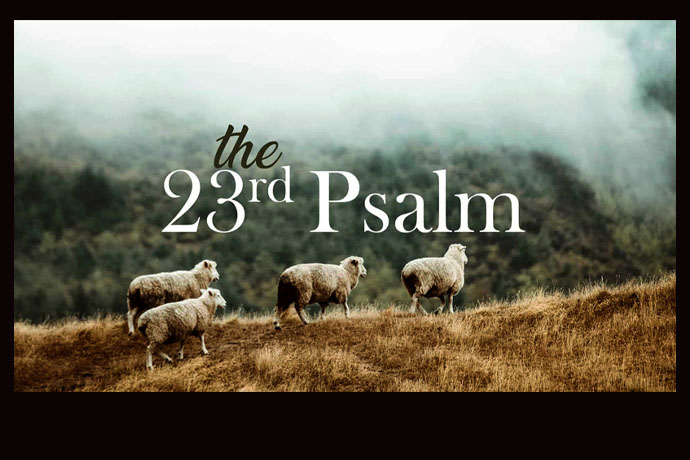
“He restoreth my soul: he leadeth me in the paths of righteousness for his name’s sake.” PSALMS 23:3
We are just like God’s people in Jermiah 7, we need restoring.
What do the following men have in common: Jacob, David, Samson, Simon Peter, John Mark,
Come thou fount of Prone to wander, Lord, I feel it, Prone to leave the God I love. ROBERT ROBINSON 1757
Come, Thou Fount of every blessing, Tune my heart to sing Thy grace;
Streams of mercy, never ceasing, Call for songs of loudest praise.
Jesus sought me when a stranger, Wand’ring from the face of God;
He, to save my soul from danger, Interposed His precious blood.
O to grace how great a debtor Daily I’m constrained to be!
Let that grace, Lord, like a fetter, Bind my wand’ring heart to Thee.
Teach me, Lord, some rapturous measure, Meet for me Thy grace to prove,
Prone to wander, Lord, I feel it; Prone to leave the God I love:
Take my heart, oh, take and seal it With Thy Spirit from above.
Rescued thus from sin and danger, Purchased by the Savior’s blood,
May I walk on earth a stranger, As a son and heir of God.
While I sing the countless treasure Of my God’s unchanging love.
“All we like sheep have gone astray; we have turned every one to his own way.” (Isaiah 53:6) We want our way; we get very stubborn. And sometimes, stubborn sheep need to be restored.
But it is the nature of the shepherd to restore his sheep. No wonder David exalted; that David who got so far away from God. No wonder he gloried to write in Psalm 23, “The LORD is my shepherd; I shall not want … He restoreth my soul.” (Psalms 23:1–3)
(Jeremiah 3:14) But while that relationship with God cannot be broken, that fellowship with God can be broken, and the joy can be lost. And therefore David prayed in Psalm 51, “Restore unto me the joy of thy salvation.” (Psalms 51:12) He didn’t say, “Lord, restore thy salvation.” He never lost his salvation; he lost the joy of his salvation, and he wanted to be restored
The Work of the Shepherd
Why We as Sheep Need to be Restored
We are Stubborn Sheep
Stubborn sheep are sheep that just want their own way. Now we think of sheep as being gentle and docile and easily led. Not necessarily so! The Bible says in Isaiah? “All we like sheep have gone astray; we have turned every one to his own way.” (Isaiah 53:6) We want our way; we get very stubborn. And stubborn sheep need to be restored.
We are Straying Sheep
These are sheep that don’t just willfully go away; they just weakly go away; they just carelessly go away. And many times they fall into pits, and they fall into crevices, and they get entangled in the thorns. And they get away from the shepherd, And they need to be brought back to the fold.
We are Sick Sheep
Sheep can get sick. There are many enemies out there, and many diseases, and many things that might poison, or ensnare, or wound the sheep. There are a lot of stuff out there that can harm us and keep us from Jesus.
How the Shepherd Restores the Sheep
He has a rod; He has a staff; and, He has a bottle of oil. He uses these to restore the sheep.
The Rod
Now He restores the stubborn sheep with the rod, it became a very powerful club, a weapon in his hand.
It was used to protect himself from the robbers. It was used to protect the sheep from the lions and the wolves and the wild dogs and the scavengers that would be there on the hillside.
But sometimes he had to use the rod on the sheep himself, and the rod itself would become a form of correction to the sheep.
Sometimes, if there would be a sheep, a very stubborn sheep, the shepherd would do something very drastic, very severe:
And an interesting thing: that sheep that had been broken and healed would stay very close to the shepherd. In the materials that I’ve studied, I found out that kind of a sheep would just stay right there by the shepherd’s leg and just keep nuzzling the shepherd. Everywhere the shepherd went, that sheep would just want to be very close. He would be the file leader who would lead the other sheep: the one who had been broken, and the one who had been restored.
Hosea chapter 6 and verse 1—look at; just listen to it: “Come, and let us return unto the LORD …”—now he’s speaking here of those who’ve been away from God—“Come, and let us return unto the LORD: for he hath torn, and he will heal us; he hath smitten, and he will bind us up.” (Hosea 6:1)
The same God that breaks us is the same God that binds us in order that we might return to Him. I got to thinking that’s exactly what David, who wrote this, meant when he said, “Before I was afflicted I went astray.” (Psalms 119:67) And then he said, “It is good for me that I have been afflicted.” (Psalms 119:71)
Jacob the patriarch, who was a shepherd himself, got away from God. You remember how Jacob got away from God? He had met God and had a wonderful experience with God; and then he got away from God. And the Bible says that he wrestled with the Lord. (Genesis 32:25) And do you know what the Lord did? The Bible says the Lord put Jacob’s thigh out of joint. Hebrews chapter 11, when Jacob came to the end of his life, “By faith Jacob … worshipped.” (Hebrews 11:21) I think it’s about verse 21—Hebrews 11 and verse 21: “When he was dying, Jacob worshipped, leaning on his staff.” Why did the Bible put that in there? To teach us a lesson. Dear friend, sometimes we have to learn to lean. And all of his life he was crippled, that he might be broken, that he might be blessed.
Now what God does sometimes, dear friend, is to chastise the sheep—not because He doesn’t love the sheep, but because He does love the sheep. Incidentally, let’s turn to the New Testament passage on that. Turn to Hebrews chapter 12 for a moment and look at this—Hebrews chapter 12, verse 5: “And have ye forgotten the exhortation which speaketh unto you as unto children, My son, despise not thou the chastening of the Lord, nor faint when thou art rebuked of him: for whom the Lord loveth he chasteneth, and scourgeth every son whom he receiveth.” (Hebrews 12:5–11)
“No chastening for the present seemeth to be joyous, but grievous: nevertheless afterward it yieldeth the peaceable fruit of”—of what?—“righteousness.” “He restoreth my soul: he leadeth me in the paths of righteousness.”
You Can Despise It
Heb 12:5 “My son, despise not thou the chastening of the Lord.” You may just despise it; you may resent it. Now it would be very foolish for you to despise it; it would be very foolish for you to resent the chastening of the Lord. I’ll tell you why—for three reasons.
Chastening Reveals Your Son-Ship
Number one: That kind of chastening reveals that you are a Son of God; it reveals your son-ship. Look in verse 6. The Bible says here, “For whom the Lord loveth he chasteneth, and scourgeth every son whim he receiveth.”
God is not in business primarily to make you healthy or happy, but to make you holy, And God didn’t save you to take you to heaven. That’s just a fringe benefit. God saved you to make you holy like Him.
Chastening Restores Our Fellowship
And so, what does it do? What does this chastening do when He restores the sheep? It reveals our son-ship. It renews our worship. And I’ll tell what else it does, dear friend: It restores our fellowship. Look, if you will, in verse 11: “Now no chastening for the present seemeth to be joyous, but grievous.” Has God ever laid the rod on you? Well, let me ask you a question: When you were a child, and your dad had to punish you and spank you, did you say, “Oh, this is so wonderful!
before I was afflicted”—David said—“I went astray.” (Psalms 119:67) Old Jacob worshipped, leaning on his staff. And that sheep that had that broken leg never wanted to stray away form the shepherd again—because he had broken, but he had healed; and he had wounded and torn, but he had bound up that wound. Thank God that the Shepherd knows exactly what He is doing.
You Can Faint Under It
Hebrews chapter 12 and verse 5. The Bible says, “Ye have forgotten the exhortation which speaketh unto you as unto children, My son, despise not thou the chastening of the Lord, nor faint when thou art rebuked of him.” Don’t despise it.
The Staff of the Shepherd
What about the straying sheep? How does the shepherd deal with the straying sheep?
Well, not only did the shepherd have a rod—verse 4 speaks of the shepherd’s rod, but verse 4 also speaks of the shepherd’s staff.
that staff he would guide the sheep. It became an instrument in his hand, and he would guide the sheep and retrieve the sheep.
David said in Psalm 40? “He hath lifted me up from the miry clay. He hath my feet upon a rock and established my goings and leads me in the paths of righteousness.” (Psalms 40:2) He’s
Sometimes a mother sheep, a ewe, would neglect her lamb
And I thought, “O my God, how the Shepherd needs to do that today: to draw these mamas and these babies backs together!”
The Bottle of Oil
You see, each night the shepherd would bring the sheep into the sheepfold. t the shepherd said, “I am the door of the sheep”? (John 10:7) I mean, inside that enclosure the sheep were safe; but at the door was the shepherd himself, who “I am the door of the sheep”—“I’m the One who lets them in; I’m the One who lets them out. No one can get in except by my permission.”
And as they would come in each night, here’s what the shepherd would do looking for a scar; he’d be looking for a bruise; he’d be looking for a scab; he’d be looking for a wounded place; he’d be looking for a laceration. he would pour on the healing oil. He would anoint the head of that sheep with oil. And that oil was there to soothe and to medicate and to heal and to lubricate—to give comfort to a suffering sheep.
That oil would be mixed also with sulfur and tar.
I think David had all of those things in mind when he said, “He restoreth my soul.” I think David had been stubborn and been broken. I think David had strayed and been retrieved. I think David had been hurt and been wounded and had been healed by the Lord.
Can’t you say the same thing?
If we don’t go from restoration to righteousness, you’re going to be right back in the same old problem.
When are we going to learn? How many times are we going to fall and slip before we learn to stay close to the Shepherd?
Jesus said, “My sheep hear my voice, and I know them, and they follow me.” (John 10:27)
Jesus taught us to pray, “Our Father which art in heaven, Hallowed be thy name.” (Matthew 6:9) Solomon said in the Song of Solomon, “Thy name is as ointment poured forth.” (Song of Solomon 1:3). Jesus Himself said, “I am the good shepherd,” (John 10:11) in John 10. “I am the good shepherd.” Do you know what the name Jesus means? It means “Jehovah saves.” That’s exactly what the name Jesus means. “Thou shalt call his name [Jehovah saves]: for he shall save his people from their sins.” (Matthew 1:21) That’s what the angel said: “Thou shalt call his name JESUS.” And, my dear friend, if I am His sheep, and He is my Shepherd, I don’t want to disgrace that name. “A good name is rather to be chosen than great reaches.” (Proverbs 22:1)
2 Timothy chapter 2 and verse 19: “Nevertheless the foundation of God standeth sure, having this seal, The Lord knoweth them that are his. And, let every one that nameth the name of Christ depart from iniquity.” (2 Timothy 2:19) Isn’t that a good verse? “Let every one that nameth the name of Christ depart from iniquity.” “He leadeth me in paths of righteousness for his name’s sake” What a Shepherd! Thank!