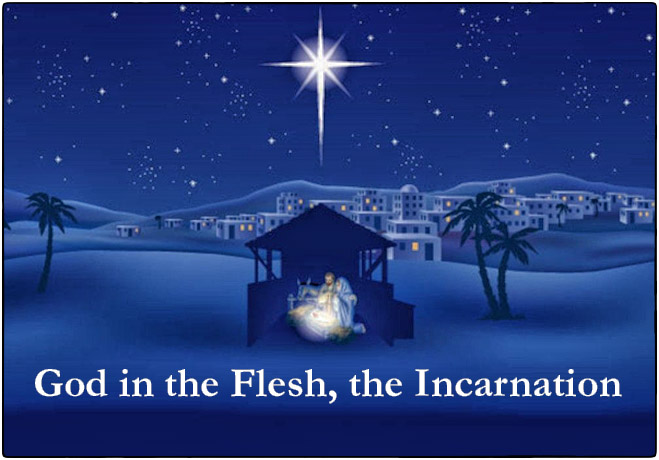
God’s Dwelling Places

First, God walked with man (Gen. 5:24; 6:9); then He desired to dwell with him (Exod. 25:8). His glory came to the tabernacle (Exod. 40:34), but when Israel sinned, the glory departed (1 Sam. 4:21–22). The glory dwelt in the temple (1 Kings 8:10–11), but then departed again because of the sins of the people (Ezek. 11:22–23). The glory came in the person of Jesus Christ (John 1:14) and dwells now in believers individually (1 Cor. 6:19–20) and the church collectively (Eph. 2:20–22). One day God’s glory will be revealed in a new heaven and earth and a perfect city where His people will dwell forever (Rev. 21–22).
In 586 BC, at the time of Jerusalem’s destruction and the forced exile of its people to Babylon, God gave a vision to the prophet Ezekiel. In that vision, Ezekiel saw the glory of God rise up from the temple in Jerusalem. The glory departed from the east side of the city and ascended three hundred feet to rest on the Mount of Olives (Ezek. 11:23).
Here is the supreme irony: In 586 BC, Ezekiel saw the glory of God leave the temple, leave the holy city, and ascend to Bethany on the Mount of Olives. At the triumphal entry, the One whom the Scriptures define as the brightness of God’s glory (Heb. 1:3) descended from Bethany and the Mount of Olives, entered the East Gate of the Holy City, and went to the temple. Do you see it? In 586 BC, the glory of God left the temple, but when Jesus came, the glory of God came back. Yet no one understood that the King of glory was in their midst, about to meet the destiny to which He was called and for which He was born.
Joseph and Mary
Jesus’ Childhood (1:18–2:23)
Matthew’s accounts of Jesus’ childhood set the stage for Jesus’ ministry depicted in the rest of the Gospel, “defining his origin and goal”
The Virgin Birth (1:18–25)
Whether this account makes historical sense rests largely on one’s presuppositions.
Would anyone whose logic was not shaped by Enlightenment thought, doubt that of all the miraculous births of history, the Messiah’s should be the most miraculous? One cannot deny testimony for a miracle by dismissing it on the grounds that miracles cannot happen; that is circular reasoning
But Matthew is less concerned to prove the virgin birth to his audience, which both accepted Jesus as Messiah and acknowledged the miraculous. Matthew is more interested in teaching, an important lesson that Jesus’ birth fulfills Scripture (1:22–23).
Theologians debate why Jesus had to be born from a virgin, sometimes suggesting, for instance, that God sent Jesus through a virgin so he could escape the sin nature. Yet for whatever other reasons God incarnated Jesus through a virgin, the only reason Matthew states is that Scripture might be fulfilled (1:22).
The child of Isaiah 7:14
13 Then Isaiah said, “Hear now, you house of David! Is it not enough to try the patience of humans? Will you try the patience of my God also? 14 Therefore the Lord himself will give you a sign: The virgin will conceive and give birth to a son, ande will call him Immanuel.
This was a child born in the time of Ahaz as a sign to the king that Judah would receive relief from attacks by Israel and Syria. The name symbolized the fact that God would demonstrate his presence with his people in this deliverance.
Because Isaiah’s children were for “signs” (8:18), Matthew was right to recognize in Immanuel (Isa 8:8) a sign pointing to the ultimate presence of God and triumph for Judah in the Davidic Messiah who would be born to Israel
The larger application, of Isaiah 7:14, is that this is a prophecy of the birth of the incarnate God, Jesus the Messiah, as shown in Matthew.
Matthew presents to us several lessons from a righteous couples, Mary and Joseph’s, obedience.
Matthew emphasizes Jesus’ purity by recounting the obedience of the family who raised him, and in the process teaches us much about how we should live (Mt 1:19, 24–25).He portrays a righteous young man and woman as models for Christian living.
Here Matthew makes it clear the ability to obey God does not depend on age.
In the whole of Matthew’s Gospel he praises not only young adults the age of Mary and Joseph but also children. Jewish men in Joseph’s day generally married around the age of eighteen or twenty, and Jewish women could marry as young as twelve or fourteen, upon reaching puberty
Joseph controlled himself, practicing sexual restraint. By calling Joseph righteous (1:19) Matthew invites us to learn from Joseph’s character about fidelity, discipline and preferring God’s honor above our own.
Like most first-century Jewish people, Joseph was faithful to his future spouse in advance, awaiting marriage, and he expected the same in return.
The self-control of this young couple challenges those today who doubt their ability to control their passions.
Matthew implicitly teaches about the nature of commitment in marriage:
Infidelity is always unjust, whereas divorce is just under some circumstances.
Let’s remember Joseph’s righteousness and the exception that Matthew’s Jewish audience would have understood permitted Joseph divorce and remarriage
Joseph was preparing to divorce Mary, and the text calls him righteous.
We should observe that the circumstances under which Joseph was planning to divorce Mary were very difficult.
Joseph had no option of giving Mary a second chance, even if he wanted to. His time was not what we live in today. Jewish and Roman law both demanded that a man divorce his wife if she were guilty of adultery. Roman law actually treated a husband who failed to divorce an unfaithful wife as a panderer exploiting his wife as a prostitute.
Joseph had more than one reason to divorce her. Because others would assume that Joseph himself must have gotten her pregnant unless he divorced her, his reputation was at stake for the rest of his life. Joseph probably also did not know Mary as well as we would expect of engaged couples today and had little reason to trust her innocence; if our sources are reliable, Galilean couples apparently enjoyed no privacy together until the wedding.
Joseph experiences the pain of betrayal, the breach of a contract more binding than a business deal in his culture, our culture has less respect for commitment and fidelity. Because a wife’s adultery could imply the husband’s inadequacy or his family’s poor choice of a mate, Mary’s apparent unfaithfulness shamed Joseph as well.
Under these circumstances, Joseph would be righteous in divorcing Mary; to fail to do so would violate law and custom, it would bring enduring reproach on his household and would constitute embracing as wife one who had betrayed him in the worst manner conceivable in his culture.
Our modern Western society offers little sympathy for Joseph’s pain. Our culture encourages marital betrayal that wounds trusting hearts, devastating homes where children should be nurtured in love and crushing whole families with the despair of abandonment.
Our society today, in many churches, we treat all kinds of divorce harshly yet often excuse adultery. Some of the same Christians who clamor for greater punishment for violent crimes or drug dealing counsel betrayed or abused spouses to be perpetually patient as if no consequences were appropriate for the betrayers or abusers.
By calling Joseph righteous Matthew challenges both our culture and our church in their lax views of sexual fidelity.
For Joseph in this case, and for Matthew, the exception, to divorce, remains a last resort, not a rationalization for a dissatisfied spouse to seek greener pastures.
In this situation, Matthew, through the life of Joseph, exhorts us to temper justice with compassion.
Joseph was righteous for divorcing Mary quietly or privately, that is, for not bringing unnecessary shame on her. He knew suffering already awaited her: her premarital pregnancy had likely already ruined any chance of her ever marrying. Divorce for her in that culture was a horrible fate in an economically and honor-driven male-centered society. There was a mandated execution for this offense, but that penalty was rarely be carried out in this period.
However, Joseph could have profited by divorcing Mary publicly. By taking her to court, Joseph could have impounded her dowry. By simply providing her a certificate of divorce in front of two or three witnesses, he would forfeit this economic reimbursement. Joseph would have to enlist the help of a village scribe or elders to get the money, and this would increase Mary’s public shame.
Joseph’s “justness” or “righteousness” reminds us that justice is not merely a matter of punishment and shame but also a matter of mercy. Joseph was going to divorce Mary, but, he would do everything in his power to minimize her shame.
Joseph valued commitment to God above his own honor
Joseph’s obedience to God cost him the right to value his own reputation.
When God reveals the truth to Joseph, he immediately believes and obeys God’s will.
What a world of difference than what we have today, many unmarried men today refuse to take responsibility even when they are the father.
Joseph trusted God enough to obey him. Yet such obedience was costly.
Because Joseph married Mary, outsiders would assume that he was the reason that Mary was pregnant before the wedding. Joseph would remain an object of shame in a society dominated by the value of honor. Mary and Joseph also chose to embrace shame to preserve the sanctity of God’s call.
First Star Trek in the New Testament
Going where no man has gone, to see God in the flesh.
This passage reminds us that we must preach the gospel to all people because we cannot always predict who will respond to the message and who will not. Those we least expect to honor Jesus may worship him, and those we least expect to oppose him may seek his death.
Here Matthew summons his readers to a personal decision
The Magi worship Jesus; Herod seeks his death; Jerusalem’s religious elite take Jesus for granted.
The Magi were astrologers from the royal court of the king of Persia. We might not expect the Magi to worship Jesus, especially if they found him not in the royal palace but in a cave.
These Magi are astrologers, and that is why they noticed the star to begin with. Many sources from this period report the skill of Magi in divination,
Although the Bible forbade divination (Deut 18:9–13), which includes astrology ( Deut 4:19), for one special event in history the God who rules the heavens chose to reveal himself where the pagans were looking.
Without condoning astrology, Matthew’s narrative challenges our prejudice against outsiders to our faith: even the most pagan of pagans may respond to Jesus if given the opportunity. What a resounding call for the church today to pursue a culturally sensitive yet uncompromising commitment to missions!
Yet even supernatural guidance like the star can take the astrologers only so far; for more specific direction they must ask the leaders in Jerusalem where the king is to be born.
Their celestial revelation was only partial; they must finally submit to God’s revelation in the Scriptures, preserved by the Jewish people.
Matthew challenges prejudice that favors political power. That Herod is dismayed by the Magi’s announcement is not surprising; in this period most Greeks, Romans and even Jews respected astrological predictions.
Herod’s reign illustrates he was more paranoid than most other rulers. For Herod, little room existed for two kings in his realm: although he was Idumean by birth, he considered himself king of the Jews.
Whereas pagan Magi act like God’s people, the king of God’s people acts like a notorious pagan king of old. When we side with the politically powerful to seek human help against common foes, we could actually find ourselves fighting God’s agendas
Matthew challenges the prejudice that respects spiritually complacent religion.
Not knowing himself where the king would be born, Herod gathers the religious experts, the chief priests and scribes, most of whom in this period were loyal to his agendas. Even though the religious leaders know where the Messiah will be born, they do not join the Magi in their quest. These are the religious leaders, but they fail to act on all their Bible knowledge. Jesus is just a baby, and they take him for granted.
Although these authorities did not desire to kill Jesus as Herod did, their successors a generation later, when Jesus could no longer be taken for granted, killed him. The line between taking Jesus for granted and wanting him out of the way may remain very thin today as well. not forget that the sin of taking Jesus for granted is the sin not of pagans who know little about him, but of religious folk and Bible teachers.
Matthew reinforces these points by reminding us that it is the pagans who worshiped Jesus.
After the Magi have left Jerusalem, they come and worship Jesus
That the Magi needed a supernatural revelation to warn them not to return by way of Jerusalem. few kings would be ready to surrender their own rule to a nonrelative some foreigners hailed as king! For that matter, not only powerful people in society but many others today seem reluctant to acknowledge Jesus’ right to direct their lives.
Jesus is for all who will receive him, and God may provide Jesus’ servants with allies in unexpected places if we have the wisdom to recognize them.
The Persecuted Child (2:13–18)
Jesus Is a Refugee, a Model for Suffering
Jesus and his family survived, but they survived as refugees, abandoning any livelihood Joseph may have developed in Bethlehem.
Some Christians in the West act as if an easy life were their divine right, as if to imply that suffering Christians elsewhere lack faith or virtue. Y
Western Christians should not be so arrogant as to think that we could never face such affliction ourselves; in due time Christians in all nations will receive their share of hardship .
While Christians are right to work for change within this world, we should not be surprised when we face hostility, false accusations or even death for Jesus’ name
God does not stop the injustice in this narrative any more than in most of the narratives we hear played on the evening news.
Yet the injustice of a world run by rebels against God cannot thwart his ultimate purposes for justice in that world.
In Jesus the Anticipated Salvation of God’s People Has Begun
Hosea 11:1 When Israel was a child, then I loved him, and called my son out of Egypt
This was the historic sign of the covenant anticipating a new exodus
Hosea 11:11They shall come trembling as a bird out of Egypt, and as a dove out of the land of Assyria; and I will make them to dwell in their houses, saith Jehovah.
By quoting the beginning of the passage, Matthew evokes the passage as a whole and shows how Jesus is the forerunner of the new exodus, the time of ultimate salvation.
Matthew uses God’s pattern in history to remind us that our call and destiny, not the ridicule of outsiders, must define us. We are the people of the new exodus, the people of God’s kingdom.
By citing Hosea 11:1 Matthew evokes the new exodus in Jesus, who embodies Israel’s purpose and mission
In a world still divided by racial and national ties, Christians from all peoples must remember that no group of people is incapable of producing evil. Herod’s behavior may thus summon us to examine the sins of our own people first .
This text shows that God called his son Jesus to identify with the suffering and exile of his people (as in 1:12, 17; compare Jer 43:5–7) as he identified with their exodus (Mt 2:15). In his incarnation Jesus identified not only with humanity in an abstract sense but with the history of a people whose history is also spiritually the history of all believers (because we have been grafted into their history and use their Scriptures).